Start with the work envelope
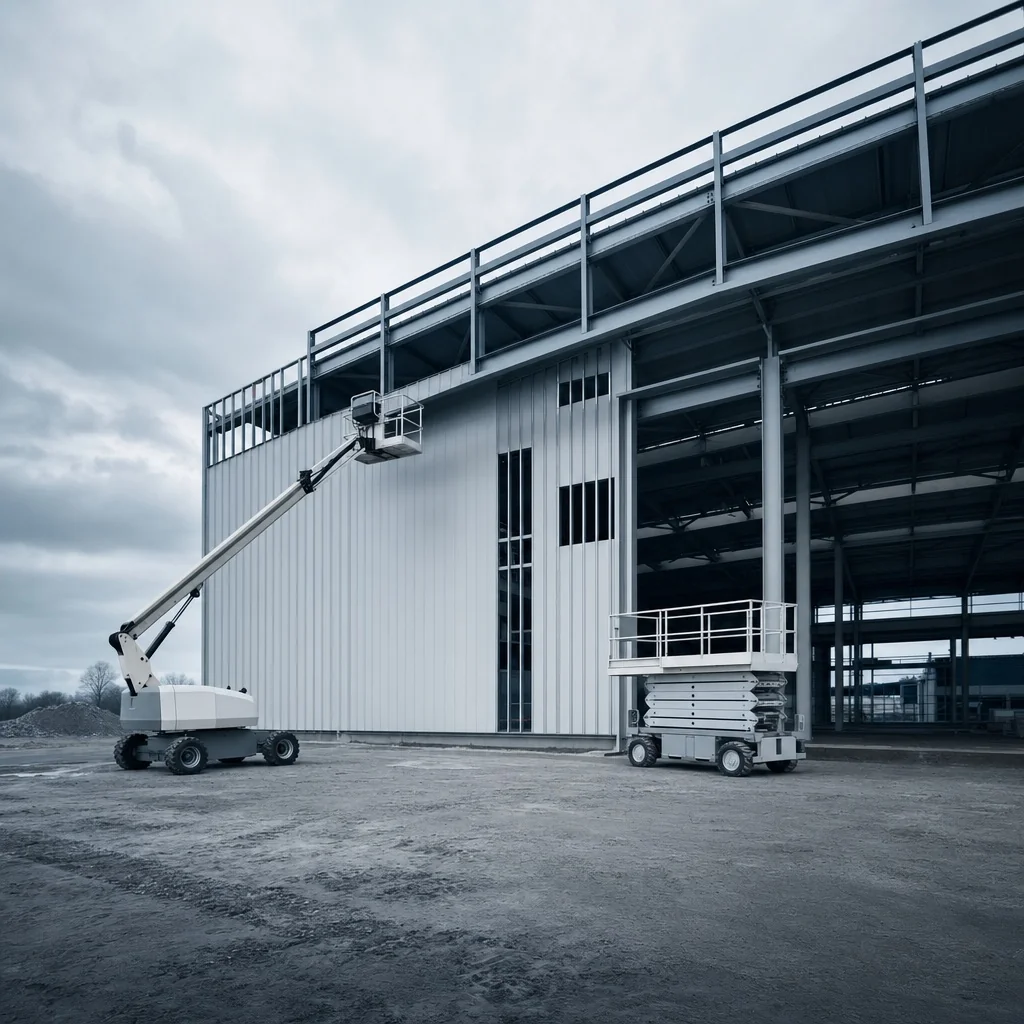
- Can the machine sit directly below the task, or is side reach required? Scissor lifts go straight up; boom lifts handle offset work.
- What is the platform height target, and will personnel, tools, or materials share the deck? Platform capacity narrows the model class.
- How wide is the access path at doors, aisles, and gates? Measure pinch points before deciding on deck size.
Charlotte site conditions that change the choice
- Warehouse and e‑commerce interiors: Smooth floors, tight racking clearances, and frequent doorway transitions point to electric slab scissor lifts. Non‑marking tires and compact widths protect polished slabs and epoxy floors.
- Outdoor industrial pads and infill sites: Red clay and rolling grades common to the Piedmont region can get slick when wet, favoring rough‑terrain scissors with higher ground clearance and lug tires. Outages or temporary power also affect charging plans for longer shifts in hot, humid summers.
Electric scissor vs. rough‑terrain scissor
- Electric slab scissors: Best where the machine can park directly beneath the task, with low emissions for indoor work and deck extensions to reach over conveyors or machinery. Typical constraints are door widths, turning radius, and floor load ratings.
- Rough‑terrain scissors: Suited to unfinished lots, utility yards, and exterior maintenance. Four‑wheel drive and wider wheelbases help on variable surfaces. Noise and exhaust considerations matter near occupied buildings.
When a scissor isn’t the match
If ducts, signage, or facade work sit off to the side, a boom lift may fit better than a scissor. Compare categories at /aerial-lift-rental/ and see /boom-lift-rental/ for articulating vs. telescopic options.
Planning details to confirm before reserving
- The narrowest pinch point from street to work bay
- Floor or soil bearing expectations along the travel path
- Required platform height and total weight on the deck
- Power access for charging or the need for engine power outdoors
See indoor options at /electric-scissor-lift-rental/ and outdoor options at /rough-terrain-scissor-lift-rental/.