Layout and movement
Map entry points for workers, delivery vehicles, and lift equipment. Long shifts in logistics operations often create overlapping flows.
- Separate pedestrian lanes from equipment paths near docks and staging areas.
- Use clear sightlines at corners so forklifts or /telehandler-rental/ units don’t blind-turn into barricades.
- For crowd guidance at commercial projects, plan wider turns and staging pockets near entries.
Surface and stability
Charlotte’s clay and mixed gravel surfaces may not hold stakes the same way as compacted fill or concrete.
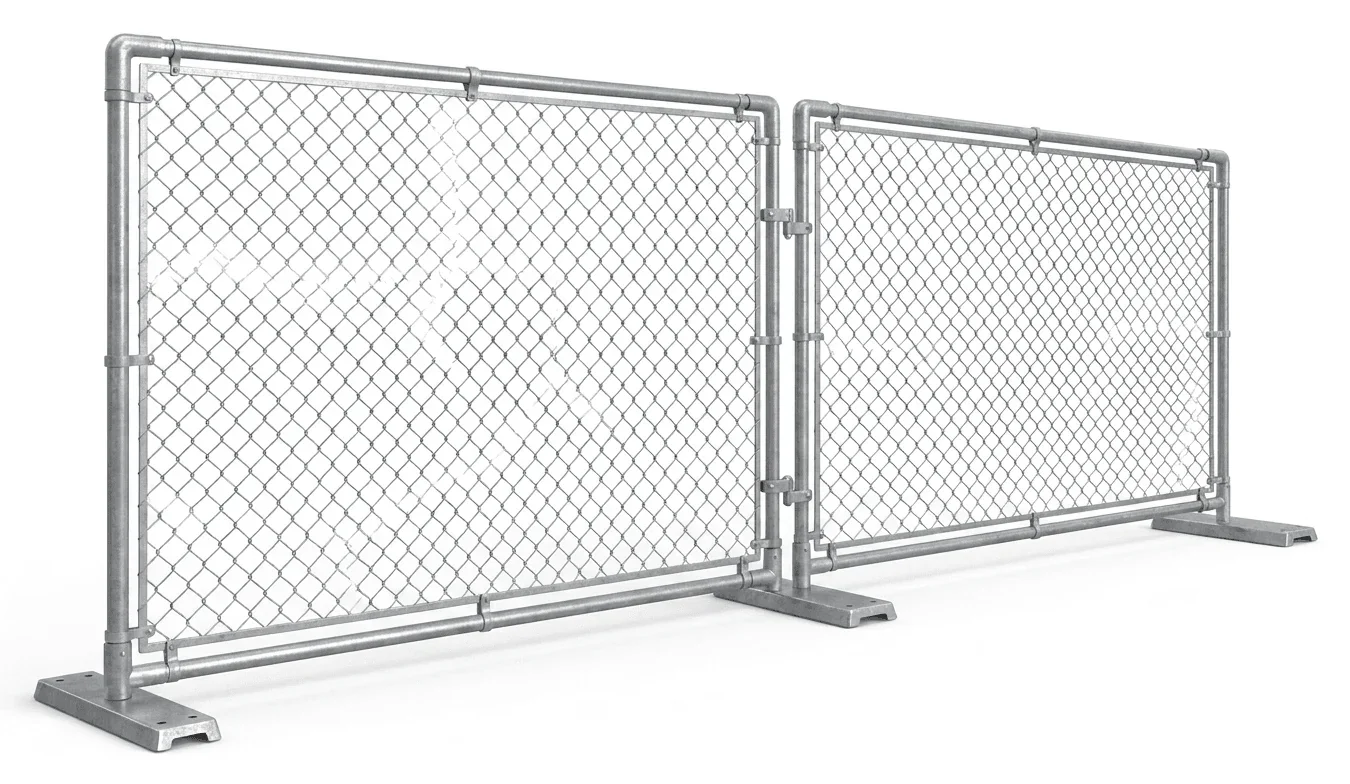
- Identify where fence lines cross pavement, grass, and clay; stability methods can change panel to panel.
- On uneven terrain, confirm panel step-down limits and site-stability factors spacing based on the selected system’s instructions and site procedures.
- After heavy rain, reassess low spots where site-stability factors could shift or silt could undermine feet.
Wind and exposure
Open pads near large buildings can create channeling winds.
- Record the length of unsupported runs and any screening planned; screens increase load and may require more site-stability factors per panel.
- Position gates out of wind tunnels where possible, or plan for additional support per the system guidance.
Integration with lift and aerial work
Where fencing defines safety zones for elevated tasks, match the perimeter to equipment geometry:
- Interior slab access: /electric-scissor-lift-rental/
- Exterior uneven ground or red clay: /rough-terrain-scissor-lift-rental/
- Overhead steel or façade reach: /boom-lift-rental/ and /articulating-boom-lift-rental/
Actual conditions, the selected system’s instructions, and site procedures govern all exterior and elevated work.
Logistics and access routes
Check truck access for delivery and pickup around active yards. Note curbs, dock heights, and turning radii. Keep laydown areas clear of drainage paths so site-stability factors stays dry and serviceable.
For coordination, call (704) 255-6957 or review categories at /products/.