What shaped this resource
Planning an aerial task in Charlotte often starts with geometry: can the machine sit below the task, or does it need to reach up and over? In local distribution buildings near major logistics corridors, ceiling equipment and rack aisles push users toward compact, vertical access. Meanwhile, outdoor projects on rolling Piedmont ground put ground conditions at the center of the decision.
Why local conditions change the comparison
- Regional soil can become slick when wet, which steers outdoor work toward rough-terrain platforms and wider wheelbases.
- Hot, humid summers influence battery performance and cooling clearances when machines run for long shifts indoors.
- Expanding infill industrial areas create a split between tight-aisle slab lifts and higher-clearance units for exterior staging yards.
How we frame equipment categories
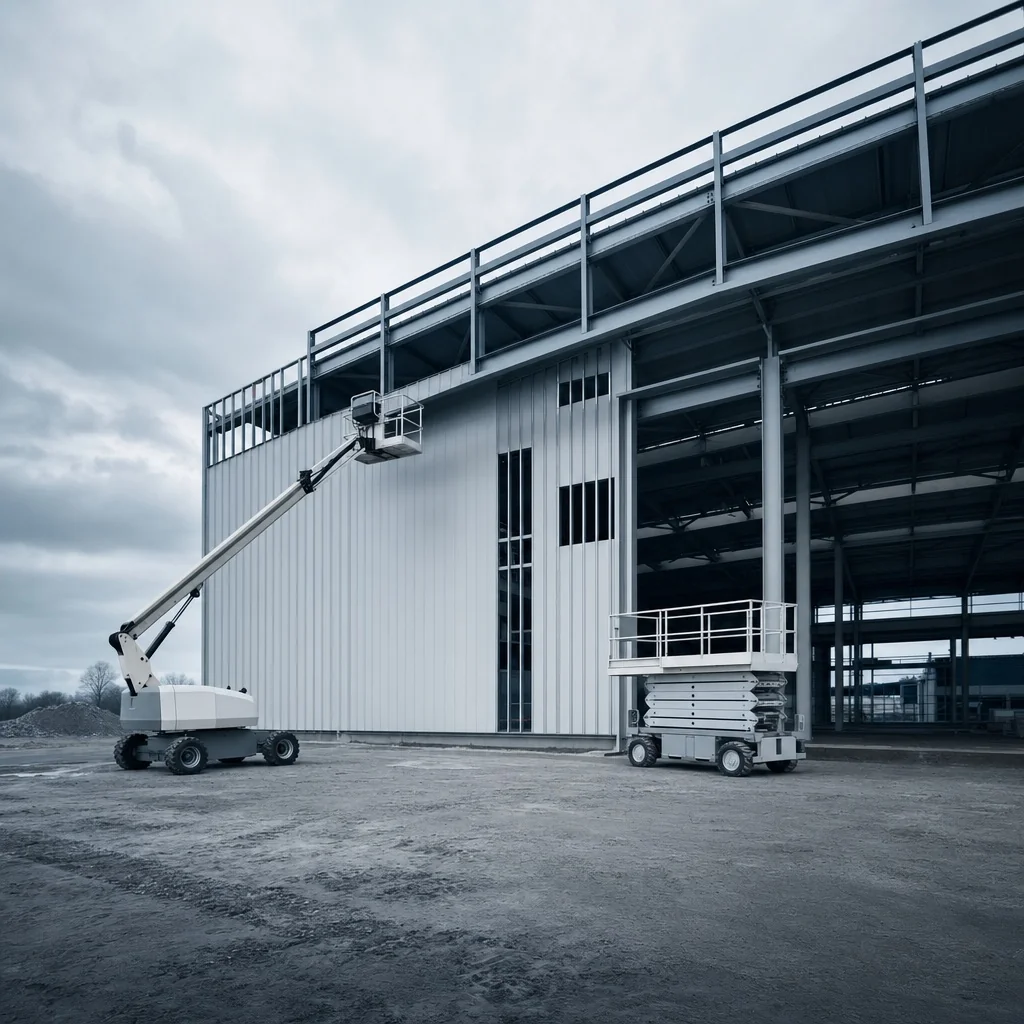
The articles organize lifts by work envelope first, then by surface requirement and power source: - Scissor lifts for straight-up work when the unit can sit under the task line. - Articulating or telescopic booms when obstacles or set-backs prevent a straight vertical approach. - Supporting site items—temporary barriers, storage, or power—when job sequencing demands it.
For scissor lift comparisons, start with whether the floor is finished slab or mixed-grade surfaces. For boom lifts, note horizontal reach, up-and-over clearance, and whether the approach must avoid production lines or building facades.
Where to go next
- Compare indoor units: /electric-scissor-lift-rental/
- Evaluate outdoor platforms: /rough-terrain-scissor-lift-rental/
- Consider up-and-over access: /articulating-boom-lift-rental/ and /telescopic-boom-lift-rental/
- Browse all categories: /products/
Questions about which factors matter most for your site conditions can be sent through /contact/ or by calling (704) 255-6957.