Define the material move
- Load weight and dimensions at maximum placement height and reach
- Typical cycle path from laydown to set point, including turns and grade changes
- Fork, carriage, or boom angle limitations based on receiving openings
Site conditions across Charlotte
Exterior work on rolling terrain and clay soils calls for rough‑terrain tires and adequate ground clearance. After wet weather, staging and approach lanes may rut or soften; match machine size and wheelbase to maintain stability. For distribution interiors, check doorway heights and turning radii before planning any interior entry, or stage transfers at dock height using suitable equipment.
Capacity at reach matters most
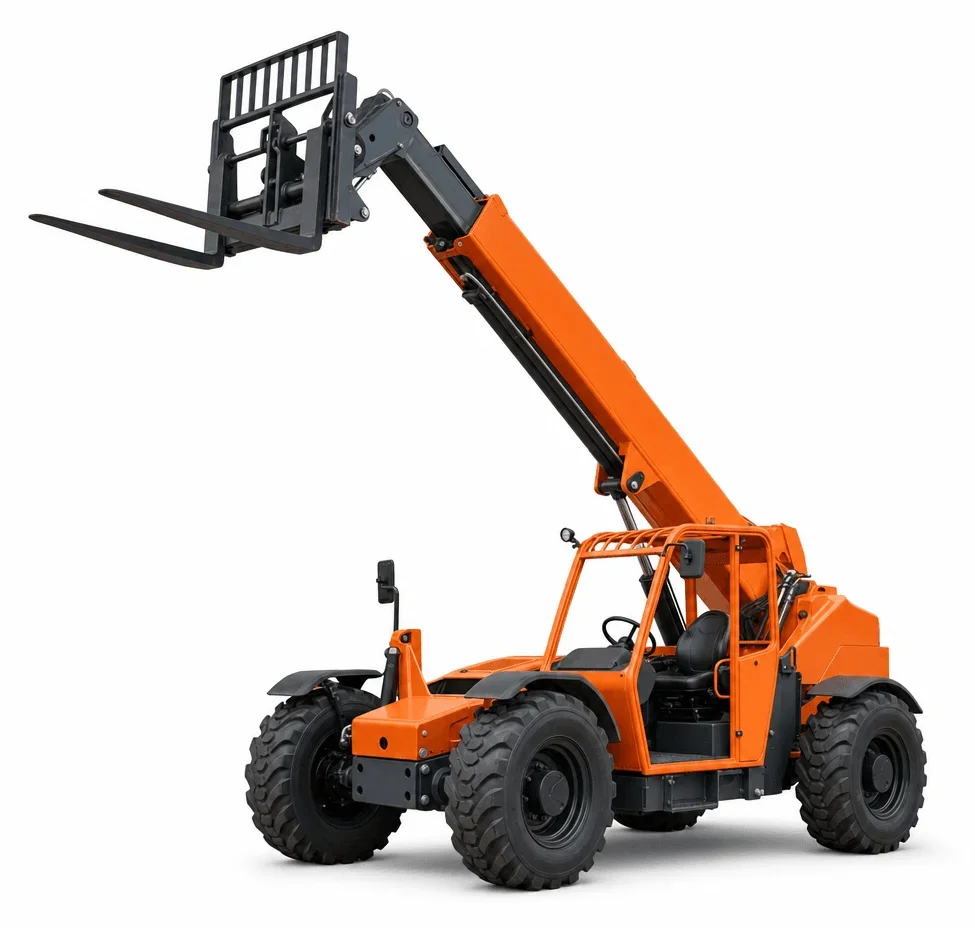
Telehandler charts vary significantly at full extension. If the plan involves placing bundles into elevated bays or over parapets, confirm the required load at that exact reach rather than base capacity. When placement is purely vertical near the mast, a forklift may be more efficient on slab.
Common Charlotte use cases
- Placing rooftop units from a stable pad on compacted base
- Feeding framing or racking components into upper levels during industrial buildouts
- Handling masonry or pipe runs across mixed gravel and clay surfaces
Related access equipment
- Overhead personnel access: Boom lifts or articulating booms
- Slab-only picks and dock work: Forklifts
- Perimeter control and staging: Temporary fencing and storage containers
Planning recap
Confirm the heaviest load at the farthest required reach, trace the travel path over actual ground, and check approach space at the set point. These details usually determine telehandler class on Charlotte jobs.