Define the exterior work envelope
- Can the machine park directly under the work area? Scissors provide vertical reach; offset tasks may call for a boom at /boom-lift-rental/.
- What platform height and deck capacity are needed for façade, glazing prep, signage, or MEP stubs?
- How wide is the travel path from staging to the work face? Wider machines may not clear temporary gates or site fencing.
Why Charlotte ground conditions matter
The Piedmont’s red clay can turn slick or rutted when wet, and mild winters keep outdoor work going most of the year. That points to higher ground clearance, aggressive tires, and oscillation features in many exterior scenarios. Verify soil firmness and bearing path along the entire travel route, including laydown areas and ramps.
Power source and noise considerations
Engine‑powered units support long exterior shifts and remote staging where charging isn’t convenient. Where work occurs near occupied buildings, sound and exhaust sensitivities may guide time‑of‑day use and staging distance.
Deck configuration and staging
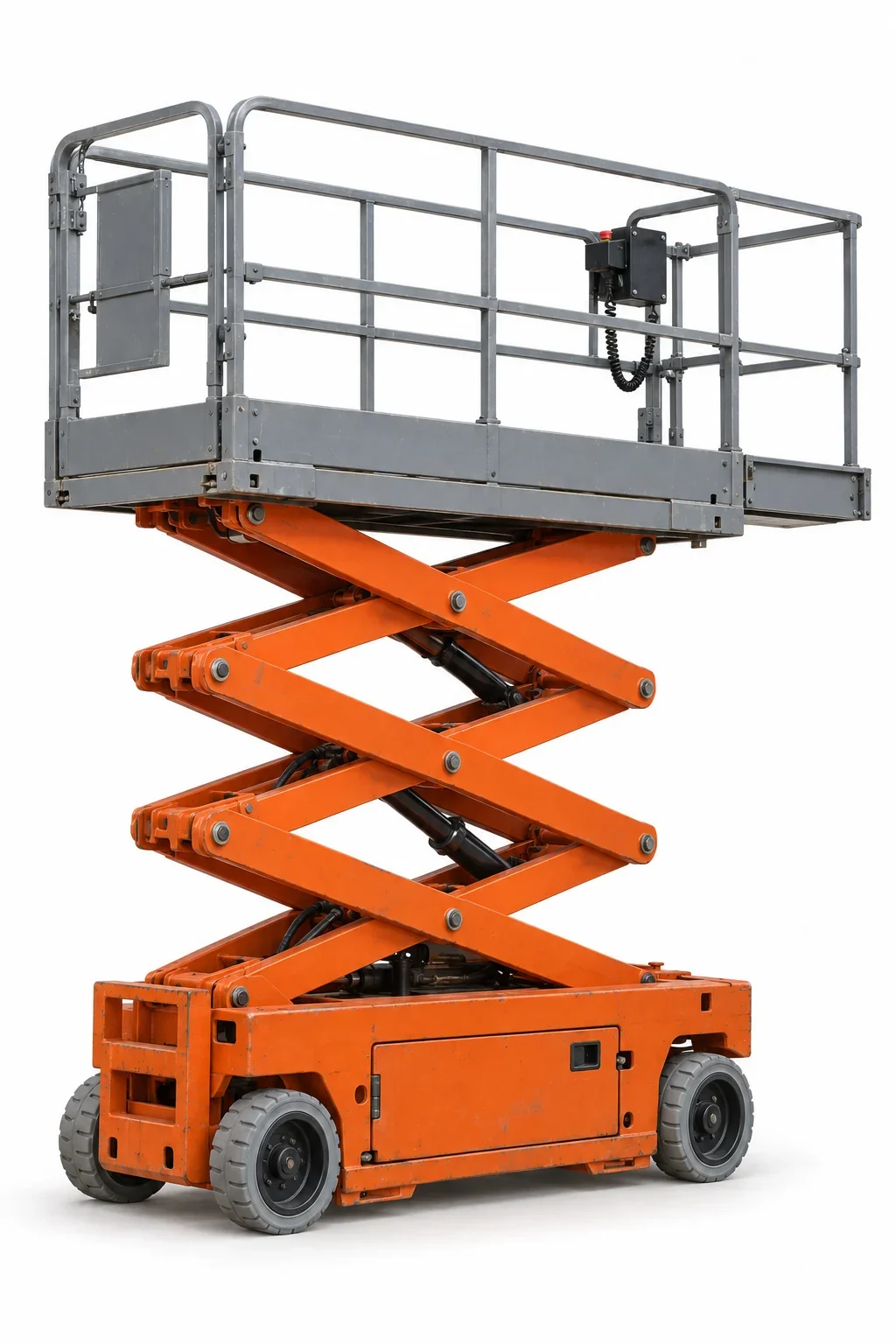
Wider platforms accommodate crews and materials but increase machine width. Plan deck length against façade features like canopies, parapets, and storefront projections to minimize re‑positioning.
When to pivot to other categories
- Offset façade, steel, or utility work: consider articulating or telescopic booms at /aerial-lift-rental/.
- Interior segments of mixed jobs: pair an outdoor scissor with an electric slab unit at /electric-scissor-lift-rental/.
Site conditions, unit documentation, and job procedures govern exterior and elevated work. Confirm grades, soil condition, and clearance before committing to a model class.